
Our Approach

Stronger health systems start within.

Humaniterra helps health organizations strengthen the human foundations of their teams and deliver more impact in the communities they serve.

We work with you to design practices and strategies that generate flourishing for staff, patients, and communities — and build the human resilience necessary to face the complexity of a rapidly changing world.

Our work is grounded in:

  • Human-centered design: A problem-solving approach that co-designs solutions with the people most affected by a challenge. As budgets are stretched, HCD’s test-and-iterate approach is not only effective — it’s simply good stewardship of increasingly limited resources.

  • Compassion science: Compassion is not just a value — it’s a performance driver for both the communities you serve and the people delivering care to them. Designing for compassion means building it into the structures, rhythms, and culture of how your organization operates — not leaving it to chance or individual disposition.

  • Organizational psychology: The science of how people think, feel, and behave within organizations — and what conditions enable them to do their best work. Most organizations treat workforce wellbeing as an individual responsibility. We treat it as a systems design challenge.
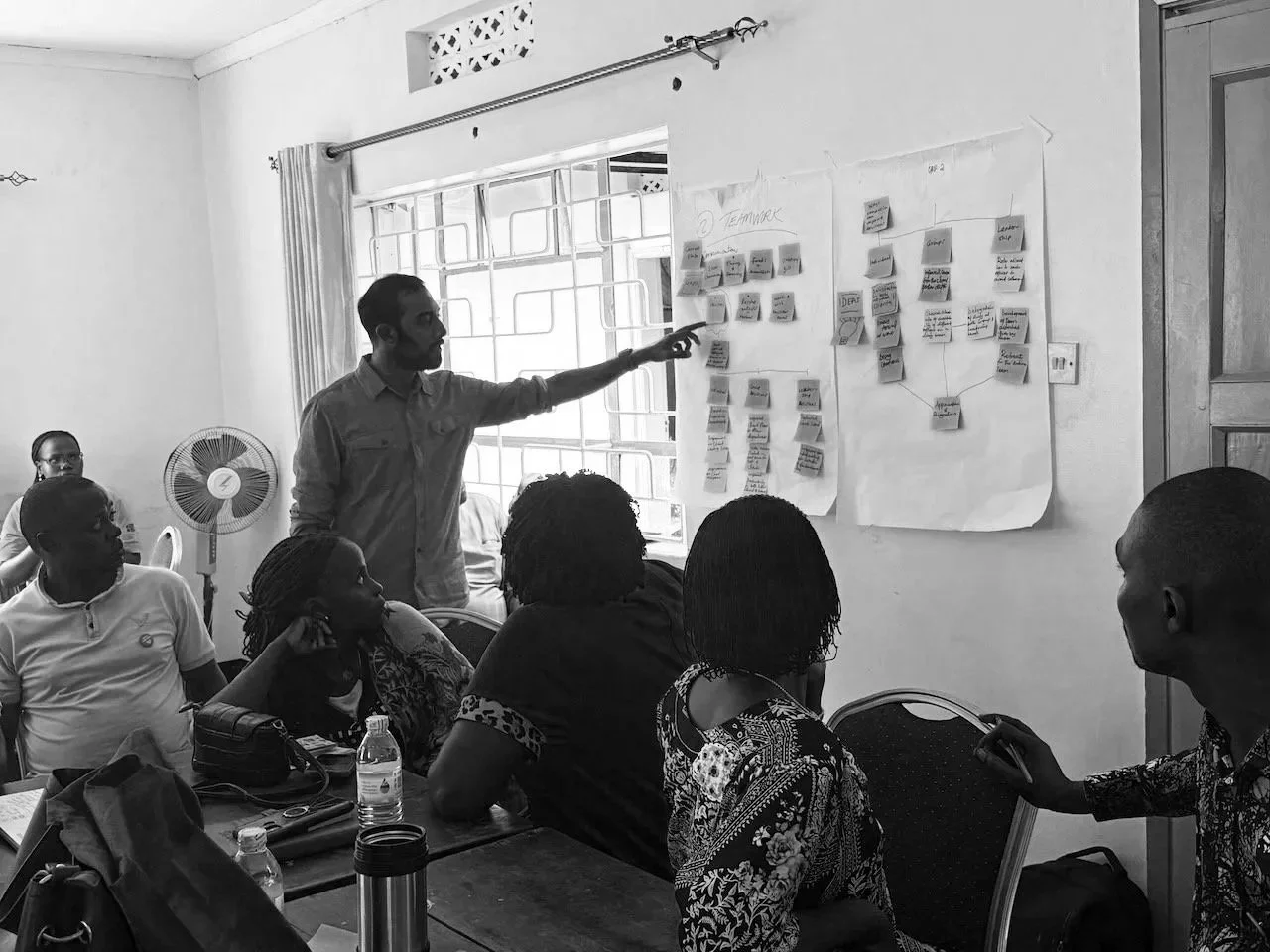

A man presents to a group of women seated around a table in a meeting room with white walls. The man points to a large paper with sticky notes on the wall, and the women listen attentively. The room has a window with curtains, a fan, and various items on the table.
A very blurred, pinkish circular object
A close-up view of an orange texture with a slightly grainy surface.

Health ecosystems don’t fail
because people lack compassion.


They fail when systems aren’t designed to support the human infrastructure required to care well.

A large, textured, purple circle on a black background.

The future of care is human.
Start designing it now.

Close-up of a purple LED light bulb emitting a soft glow.
Blurry image with a large circular shape in the center, making it difficult to identify specific objects or details.

FAQs

  • Every organization has a technical infrastructure — systems, processes, technology, protocols. But there's another layer that determines whether those systems actually work: the relational and cultural operating system that enables teams to deliver care well, adapt to change, and sustain impact. We call this human infrastructure.

    It includes things like psychological safety, trust between colleagues and leadership, a sense of belonging, the capacity to give and receive compassion, and the cultural norms that shape how people show up for one another every day.

    Human infrastructure isn't soft — it's load-bearing. When it's strong, organizations perform well. When it erodes, no amount of technical investment fixes it. Strengthening it is our mission — so you can deliver on yours.

  • Human-centered design (HCD) is a problem-solving approach that begins with the people most affected by a challenge and involves them throughout the process of understanding, ideating, co-creating, prototyping, and testing solutions.

    In practice, this looks like immersive listening and observing, building meaningful relationships with the people we’re designing with, participatory workshops, rapid prototyping, and iterative learning.

    HCD follows a process that looks something like this:

    image|Human-centered design process|#


    We use HCD because:

    • It is built on empathy. HCD is deeply rooted in the lived experience and holistic ecosystems of our clients and the intended end-users of a solution. We start by building real, human relationships with the people we design with.

    • The solutions are more likely to stick. HCD surfaces realities that traditional program development often misses—and is more dynamic and engaging than typical “participatory” processes, involving people at every level and every function of an organization, from cleaner to senior executive.

    • It is fun! HCD reconnects people to their creativity and imagination in the face of seemingly intractable problems, engaging teams to co-create solutions they own, rather than having change imposed on them.

    • It de-risks investments in new solutions. HCD is a responsive process that enables teams to fail fast, learn quickly, and generate evidence at a small scale before making large investments in new ideas or launching new programs at full scale — reducing the risk of rolling out poorly fitting or ineffective interventions.

    • It is evidence-based. Peer-reviewed literature from global health and public health shows that HCD generates more relevant, impactful, and sustainable interventions and strategies. In our work, HCD doesn’t replace traditional evidence and planning tools — it complements them by grounding strategies and interventions in the lived reality of the people they’re meant to serve.

  • Compassion isn’t just a “nice-to-have” value; it’s a fundamental driver of system performance.

    More compassion = more impact.

    At Humaniterra, we use this definition of compassion — awareness, empathy, and action — as a guide for how we design relationships, services, and systems

    image|compassion graphic|#


    Why compassion matters

    The evidence tells us that:

    • The emotional culture of an organization matters. When colleagues care for one another, loneliness and isolation at work decrease, while job satisfaction and engagement increase. 

    • High-quality relationships and meaningful connections at work are associated with better collaboration, higher productivity, and better client experience and outcomes.

    • In clinical settings, compassion has been found to be the #1 driver of patient quality care ratings – surpassing typical metrics, like wait times, clinical communication, and pain & symptom management. 

    • Compassionate care is associated with better patient outcomes, faster recovery, higher adherence to treatment, lower costs, and higher patient satisfaction. 

    • Givers of compassion also benefit: those who extend compassion report lower burnout and greater wellbeing.


    Compassion endures when it’s seen as strategy, not sentiment.

    At Humaniterra, we focus on compassion because it is both deeply human and deeply practical: it supports staff, improves services, and makes systems more adaptive in the face of constant change.

  • Yes. Our work is grounded in a growing body of evidence across three areas:

    1. Organizational psychology & workforce wellbeing

    Burnout and moral injury among health professionals is linked to worse patient safety, quality, and retention. Conversely, supportive and psychologically safe team climates are associated with lower burnout, higher intent to stay, better teamwork, and more reliable care.

    2. Human-centered design

    Reviews of HCD in health and global health show its potential to generate more effective, acceptable, and sustainable solutions by aligning innovations with the needs and contexts of the people who use them. It adds particular value in complex, resource-constrained environments where top-down approaches often fall short. Leading global health institutions — including the WHO, UNICEF, and the World Bank — have formally adopted HCD as a core approach to tackling complex health challenges, recognizing its particular power to generate solutions that communities actually adopt and sustain.

    3. Compassion

    Studies show that compassionate health systems lead to better outcomes – not only for those receiving care, but also for those providing it. Among patients, compassion improves quality of care, patient safety & satisfaction, adherence to treatment, and can even reduce unnecessary utilization and costs. Among staff, compassion mitigates burnout, improves mental and emotional health, and reduces attrition. At the organizational level, compassion improves collaboration, effectiveness, and long-term sustainability.

    Humaniterra weaves these strands into practical processes and tools — helping strengthen how people relate, how services are designed, and create adaptable, responsive systems for emerging complexities and crises.

the name behind the work

Humaniterra definition

"human"

The shared experience of suffering and need for social connectedness and belonging in organized systems of compassion and interdependence.

"i"

Each of us shapes — and is shaped by — the systems in which we live and work. Adaptive, compassionate systems start with each individual's awareness of their own role within them.

"terra"

Latin word meaning "earth" or "ground." For us, the foundation or ecosystem that gives rise to our health, wellness, and flourishing.

THE HUMANITERRA TEAM

Our People

Blurred abstract background with gradient shades of beige, orange, and pink.
Image of Heather Buesseler, Founder / Chief Visionary Officer at Humaniterra

Heather Buesseler
(she/her)

Founder / Chief Visionary Officer

Heather Buesseler

Founder / Chief Visionary Officer

Heather is a 20-year global public health innovator known for her ability to craft bold visions and bring them into reality through creative partnerships, breaking down siloed mindsets, and developing systems-level solutions. Her vocational North Star is transforming public health and healthcare systems to be more human, compassionate, and equity-centered — particularly for those who work in them. Heather has deep experience working cross-culturally with populations experiencing health disparities. She has worked across Africa and Southeast Asia and with resettled refugees and immigrants in the U.S. and speaks French. When she's not plugging away at her next big idea, Heather loves canoeing, living room dance parties with her 8-year-old daughter, and coaxing food to grow in her backyard urban garden.

Blurred gradient background with shades of brown and pink
Image of Dipanjan Chatterjee, Chief Strategist & Design-Thinking Lead at Humaniterra

Dipanjan Chatterjee
(he/him)

Strategy & Design-Thinking
Lead
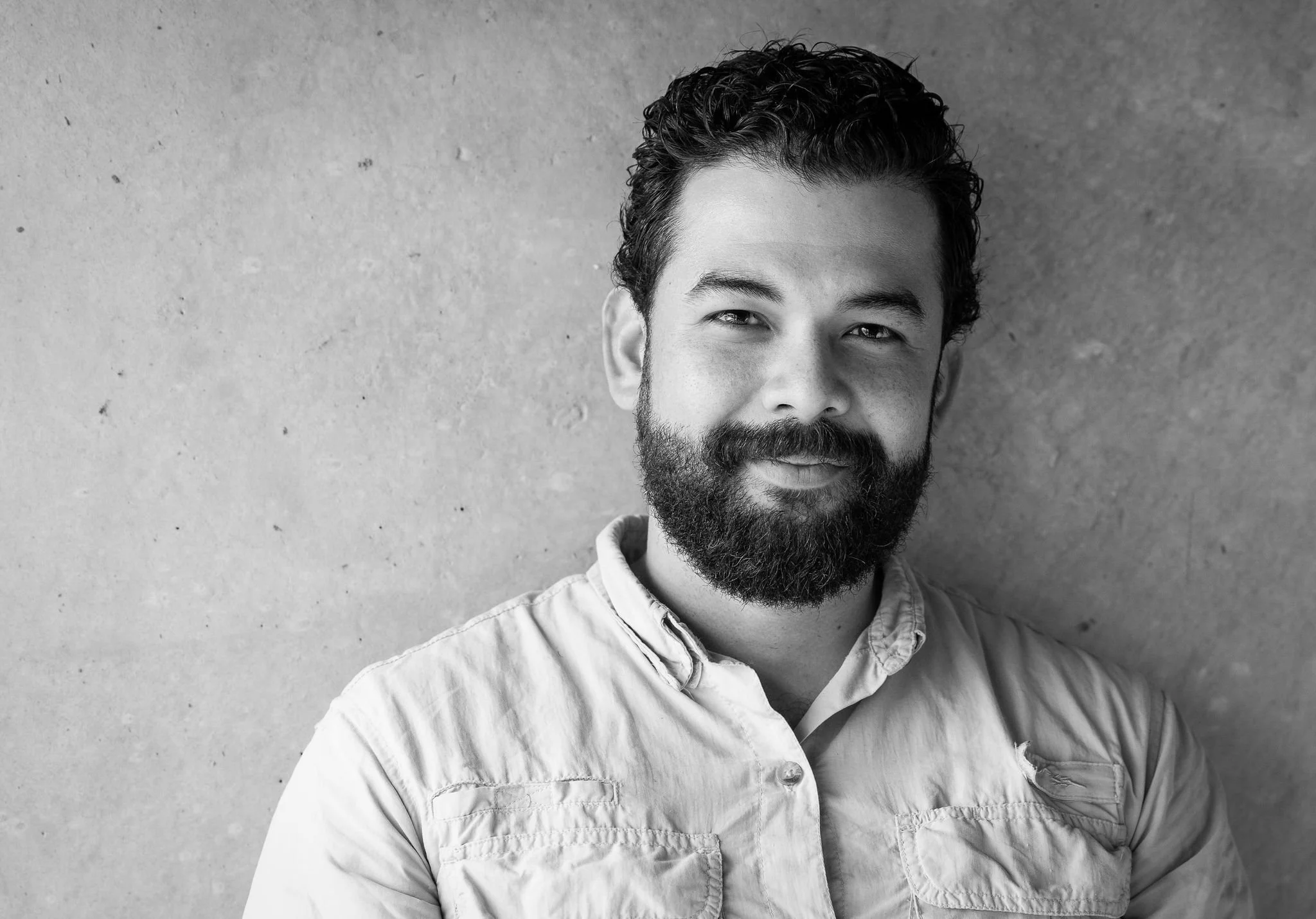
Dipanjan Chatterjee

Human-Centered Design Lead

Dipanjan is an inventive leader and strategist who has led numerous complex, high-profile human-centered design projects spanning research, design, strategy, and workshop facilitation. He empowers organizations to create their future with innovative approaches that create a safe space for people to push past their comfort zone in favor of new thinking. Most recently, he led Medtronic's Innovation Lab, the company's internal user design group focused on improving the UX and efficiency of medical devices and healthcare experiences. He has also led a wide range of strategy, innovation, and design projects at UnitedHealth Group, Target, Apple, Zeus Jones, and Steelcase. But whether he's in a Fortune 500 boardroom or doing walkalongs with a community health worker in rural Uganda, Dipanjan always shows up authentically with humor and ease. Outside of work, he gets his kicks playing basketball, eating dessert, and spending time with his wife and two tiny humans.

Blurred image with shades of orange, pink, brown, and white, no specific objects or details visible.
Image of Allan Martinez Venegas, Human-centered Designer at Humaniterra

Allan Martinez Venegas
(he/him)

Human-Centered
Designer

Allan Martinez Venegas

Human-Centered Designer

Allan is a social innovator, applied anthropologist, and human-centered design specialist with extensive experience tackling global social challenges. His projects include addressing mosquito-borne diseases in rural Panama, understanding COVID-19 vaccine hesitancy in Kenya, identifying protection risks in humanitarian operations in Nepal, and tackling causes of school attrition in Liberia, among many others. With a strong teaching background, Allan is a global trainer, facilitator, and instructor at institutions including University of Turin, United Nations International Training Center of the International Labour Organization, Macalester College, and IDEO, a premier human-centered design firm. Outside of his work, Allan can be found in urban trails around the Twin Cities preparing for the next swim, bike, or running race.

Abstract blurred background with warm orange and white tones.
Smiling young man standing outdoors on a sunny day, crossing his arms, wearing a striped short sleeve shirt and beige pants, with a watch on his wrist, and a wooden railing behind him with green trees and a partly cloudy sky in the background.

Tumusiime Joseph
(he/him)

Facilitator
East Africa

Tumusiime Joseph

Facilitator, East Africa

Tumusiime is a Ugandan social worker dedicated to promoting community well-being and sustainable social development through compassionate and ethical practice. He is currently a Program Officer with Nama Wellness Community Centre where he leads rural community outreach efforts that strengthen the dignity and empowerment of individuals, families, and communities in Mukono, Uganda.

After leading Nama Wellness’ Compassion x Design initiatives for the past 3 years, Tumusiime also partners with Humaniterra as an independent facilitator—bringing hands-on, community-rooted experience to its work across East Africa. His positive, engaging facilitation style lights up a room and draws in even the most reluctant participants. When he’s not working, Tumusiime loves spending time with his German shepherd, Maya, and his wife—who has reluctantly come around to the idea of a dog.

Very blurry, abstract gradient with shades of orange, pink, and white.
A smiling man with short hair and a beard wearing a yellow and navy blue striped polo shirt, standing with his hands in his pockets against a plain white background.

Musulwa Augustine
(he/him)

Facilitator
East Africa

Musulwa Augustine

Facilitator, East Africa

Augustine Musulwa is a finance and development professional with nearly 20 years’ experience supporting humanitarian, nonprofit, and community-based organizations. Currently serving as Finance and Administration Officer at Safari Doctors in Lamu, Kenya, he integrates development finance, sustainability, and community-centered approaches that are genuinely responsive to human need.

Musulwa is energized by helping teams navigate change, steward limited resources wisely, and maximize impact. His facilitation style is reflective and participatory, and he is passionate about nurturing compassionate leadership that honors both the communities served and the people doing the work. After championing Safari Doctors’ Compassion x Design work over the past 3 years, he also now partners with Humaniterra as an independent facilitator—bringing culturally grounded, lived experience to enrich and support its work in East Africa.


Musulwa is pursuing a doctorate in theology and has authored a five-part series of devotional books.

An abstract background with a gradient of orange, pink, and white colors.
Image of Jason Teeters, Regenerative Organizational Design Advisor at Humaniterra

Jason Teeters
(he/him)

Regenerative Org Design Advisor

Jason Teeters

Regenerative Organizational Design Advisor

Jason is a regenerative leader, emergent strategist, soulful facilitator, and speaker who inspires, challenges, and educates leaders and organizational teams. Over the past two decades, he has worked across public health, education, business, technology, and entrepreneurial ecosystem design, advising organizations on people strategy, organizational purpose, growth strategy, and regenerative leadership practices. He is the Founder of JetSetState, an innovation firm that helps large global institutions work in ways that improve the well-being and performance of their organizational teams. He has worked with the Centers for Disease Control and Prevention (CDC), United Nations, Rockefeller Foundation, W.K. Kellog Foundation, and Movember, one of the largest NGOs focused on mens' mental health and well-being. Jason holds a Master's degree in Industrial Organizational Psychology. And outside of his day-to-day, he enjoys traveling the world with his wife and their two kids, whose names were inspired by their nuptials in Marrakech, Morocco, daughter Marra and son Kesh.

Blurred image with warm orange and white tones, no discernible objects or details.
Image of Dr. Mitch Radin, Trauma-Informed Transformation Advisor at Humaniterra

Dr. Mitch Radin
(he/him)

Trauma-Informed
Transformation Advisor

Dr. Mitch Radin

Trauma-Informed Transformation Advisor

Mitch is a clinical psychologist with a 25-year career working in the field of trauma and crisis management. In addition to his consulting work, he is currently a psychology manager at Hennepin Healthcare in Minneapolis, where he is actively developing a robust system of emotional support and crisis response for healthcare workers throughout the health system to address issues of moral injury, burnout, compassion fatigue, secondary trauma, and acute stress. The impacts from this work earned him the 2023 Healthcare Hero Award from the Minneapolis-St. Paul Business Journal. Mitch spent the first 16 years of his career tackling complex issues of mental illness and homelessness in the California Bay Area and teaching crisis intervention classes to law enforcement officials. Mitch is a music enthusiast who loves spending time with his amazing wife, two kids who inspire frequent moments of astonishment, and impossibly cute dog.

THE HUMANITERRA TEAM

Our People

Image of Heather Buesseler, Founder / Chief Visionary Officer at Humaniterra

Heather Buesseler (she/her)

Founder / Chief Visionary Officer

Heather Buesseler

Founder / Chief Visionary Officer

Heather is a 20-year global public health innovator known for her ability to craft bold visions and bring them into reality through creative partnerships, breaking down siloed mindsets, and developing systems-level solutions. Her vocational North Star is transforming public health and healthcare systems to be more human, compassionate, and equity-centered — particularly for those who work in them. Heather has deep experience working cross-culturally with populations experiencing health disparities. She has worked across Africa and Southeast Asia and with resettled refugees and immigrants in the U.S. and speaks French. When she's not plugging away at her next big idea, Heather loves canoeing, living room dance parties with her 8-year-old daughter, and coaxing food to grow in her backyard urban garden.

Image of Dipanjan Chatterjee, Chief Strategist & Design-Thinking Lead at Humaniterra

Dipanjan Chatterjee (he/him)

Strategy
& Design-Thinking Lead

Dipanjan Chatterjee

Human-Centered Design Lead

Dipanjan is an inventive leader and strategist who has led numerous complex, high-profile human-centered design projects spanning research, design, strategy, and workshop facilitation. He empowers organizations to create their future with innovative approaches that create a safe space for people to push past their comfort zone in favor of new thinking. Most recently, he led Medtronic's Innovation Lab, the company's internal user design group focused on improving the UX and efficiency of medical devices and healthcare experiences. He has also led a wide range of strategy, innovation, and design projects at UnitedHealth Group, Target, Apple, Zeus Jones, and Steelcase. But whether he's in a Fortune 500 boardroom or doing walkalongs with a community health worker in rural Uganda, Dipanjan always shows up authentically with humor and ease. Outside of work, he gets his kicks playing basketball, eating dessert, and spending time with his wife and two tiny humans.

Image of Allan Martinez Venegas, Human-centered Designer at Humaniterra

Allan Martinez Venegas (he/him)

Human-Centered
Designer

Allan Martinez Venegas

Human-Centered Designer

Allan is a social innovator, applied anthropologist, and human-centered design specialist with extensive experience tackling global social challenges. His projects include addressing mosquito-borne diseases in rural Panama, understanding COVID-19 vaccine hesitancy in Kenya, identifying protection risks in humanitarian operations in Nepal, and tackling causes of school attrition in Liberia, among many others. With a strong teaching background, Allan is a global trainer, facilitator, and instructor at institutions including University of Turin, United Nations International Training Center of the International Labour Organization, Macalester College, and IDEO, a premier human-centered design firm. Outside of his work, Allan can be found in urban trails around the Twin Cities preparing for the next swim, bike, or running race.

Image of Jason Teeters, Regenerative Organizational Design Advisor at Humaniterra

Jason Teeters (he/him)

Regenerative Org Design
Advisor

Jason Teeters

Regenerative Organizational Design Advisor

Jason is a regenerative leader, emergent strategist, soulful facilitator, and speaker who inspires, challenges, and educates leaders and organizational teams. Over the past two decades, he has worked across public health, education, business, technology, and entrepreneurial ecosystem design, advising organizations on people strategy, organizational purpose, growth strategy, and regenerative leadership practices. He is the Founder of JetSetState, an innovation firm that helps large global institutions work in ways that improve the well-being and performance of their organizational teams. He has worked with the Centers for Disease Control and Prevention (CDC), United Nations, Rockefeller Foundation, W.K. Kellog Foundation, and Movember, one of the largest NGOs focused on mens' mental health and well-being. Jason holds a Master's degree in Industrial Organizational Psychology. And outside of his day-to-day, he enjoys traveling the world with his wife and their two kids, whose names were inspired by their nuptials in Marrakech, Morocco, daughter Marra and son Kesh.

A young man smiling outdoors, crossed arms, wearing a t-shirt, watch, and beige pants, with green trees and a blue sky in the background.

Tumusiime Joseph (he/him)

Facilitator
East Africa

Tumusiime Joseph

Facilitator, East Africa

Tumusiime is a Ugandan social worker dedicated to promoting community well-being and sustainable social development through compassionate and ethical practice. He is currently a Program Officer with Nama Wellness Community Centre where he leads rural community outreach efforts that strengthen the dignity and empowerment of individuals, families, and communities in Mukono, Uganda.

After leading Nama Wellness’ Compassion x Design initiatives for the past 3 years, Tumusiime also partners with Humaniterra as an independent facilitator—bringing hands-on, community-rooted experience to its work across East Africa. His positive, engaging facilitation style lights up a room and draws in even the most reluctant participants. When he’s not working, Tumusiime loves spending time with his German shepherd, Maya, and his wife—who has reluctantly come around to the idea of a dog.

Portrait of a smiling man wearing a navy and yellow striped polo shirt with his right hand in his pocket, posing against a plain white background.

Musulwa Augustine (he/him)

Facilitator
East Africa

Musulwa Augustine

Facilitator, East Africa

Augustine Musulwa is a finance and development professional with nearly 20 years’ experience supporting humanitarian, nonprofit, and community-based organizations. Currently serving as Finance and Administration Officer at Safari Doctors in Lamu, Kenya, he integrates development finance, sustainability, and community-centered approaches that are genuinely responsive to human need.

Musulwa is energized by helping teams navigate change, steward limited resources wisely, and maximize impact. His facilitation style is reflective and participatory, and he is passionate about nurturing compassionate leadership that honors both the communities served and the people doing the work. After championing Safari Doctors’ Compassion x Design work over the past 3 years, he also now partners with Humaniterra as an independent facilitator—bringing culturally grounded, lived experience to enrich and support its work in East Africa.


Musulwa is pursuing a doctorate in theology and has authored a five-part series of devotional books.

Image of Dr. Mitch Radin, Trauma-Informed Transformation Advisor at Humaniterra

Dr. Mitch Radin (he/him)

Trauma-Informed
Transformation Advisor

Dr. Mitch Radin

Trauma-Informed Transformation Advisor

Mitch is a clinical psychologist with a 25-year career working in the field of trauma and crisis management. In addition to his consulting work, he is currently a psychology manager at Hennepin Healthcare in Minneapolis, where he is actively developing a robust system of emotional support and crisis response for healthcare workers throughout the health system to address issues of moral injury, burnout, compassion fatigue, secondary trauma, and acute stress. The impacts from this work earned him the 2023 Healthcare Hero Award from the Minneapolis-St. Paul Business Journal. Mitch spent the first 16 years of his career tackling complex issues of mental illness and homelessness in the California Bay Area and teaching crisis intervention classes to law enforcement officials. Mitch is a music enthusiast who loves spending time with his amazing wife, two kids who inspire frequent moments of astonishment, and impossibly cute dog.

More human is possible.